
12 Best WooCommerce Plugins (Free and Paid)
Last updated on

Looking for the best WooCommerce plugins for your online store? With WooCommerce plugins, you can extend the functionality of your store and grow your business.
WooCommerce powers over 4 million stores and offers thousands of plugins. With so many plugin options available, choosing the right ones can be confusing.
I tested multiple plugins to find the right options for your WooCommerce store. My testing showed that the top plugins include OptinMonster for popup campaigns, MonsterInsights for Google Analytics tracking, and SeedProd for custom store page designs.
In this article, I’ve rounded up some of the best WooCommerce plugins to help you boost conversions and scale your business.
The Best WooCommerce Plugins at a Glance
Here’s how the twelve plugins compare, what they’re best for, whether they have a free version, and their first-year price plus renewals.
| Plugin | What it does for a store | Free version | Plan with the WooCommerce feature | First year → renewal |
|---|---|---|---|---|
| OptinMonster | Popups and cart abandonment | Yes, 3 campaigns | Growth | $804 → $1,470/yr |
| MonsterInsights | Sales tracking in Google Analytics 4 | Yes, but eCommerce tracking is Pro | Pro | $199.50 → $399/yr |
| SeedProd | Custom store page design | Yes, no WooCommerce blocks | Elite | $239.60 → $599/yr |
| AffiliateWP | Affiliate program | No | Personal | $149.50 → $299/yr |
| Wholesale Suite | Wholesale pricing | Yes, wholesale prices | Wholesale Prices Premium (minimum orders) | $99 → $198/yr (one site) |
| Smash Balloon | Social and review feeds | Yes, six feed plugins | Instagram Feed Pro Elite (shoppable feeds) | $149 → $298/yr |
| Variation Swatches | Color and image swatches | Yes, core swatch types | Free (Pro Starter adds shop-page swatches) | Free, or $49/yr |
| WPForms | Forms | Yes | No native WooCommerce integration | $49.50 → $99/yr (Basic) |
| Uncanny Automator | Automations between plugins | Yes, 2 WooCommerce triggers | Basic | $240/yr first year |
| All in One SEO | Product and category SEO | Yes, without WooCommerce SEO | Basic | $49.50 → $99/yr |
| FunnelKit | Checkout pages, order bumps, upsells | Yes, checkout pages | Basic (order bumps), Plus (upsells) | $99.50 → $129/yr (Basic) |
| LedgerPort | QuickBooks Online accounting | Yes, 30 orders a month | Scale (real-time sync, payout journals) | $67/mo billed annually |
How I Tested These WooCommerce Plugins
Most WooCommerce stores end up running several plugins, and each one is another license to renew. Pick the wrong one, and you can end up paying for a plan that doesn’t include the feature you bought it for, or watching the price double at renewal.
So I put each plugin through the same checks, using a test WooCommerce store wherever I could, and here are the factors I considered when evaluating them.
- Real cost: I found the cheapest plan that includes the WooCommerce feature, then compared its first-year price with the renewal price.
- Free version: I checked what each free version actually does for a store, and what it holds back for a paid plan.
- WooCommerce fit: I looked at whether each plugin works with WooCommerce on its own, like cart-based targeting or product SEO settings, or needs an add-on or a workaround.
- Setup: I went through each setup wizard and settings screen on the test store, and noted anything that could trip up a new store owner, like LedgerPort’s currency warning.
Now, let’s look at some of the best WooCommerce plugins you can get your hands on today.
1. OptinMonster
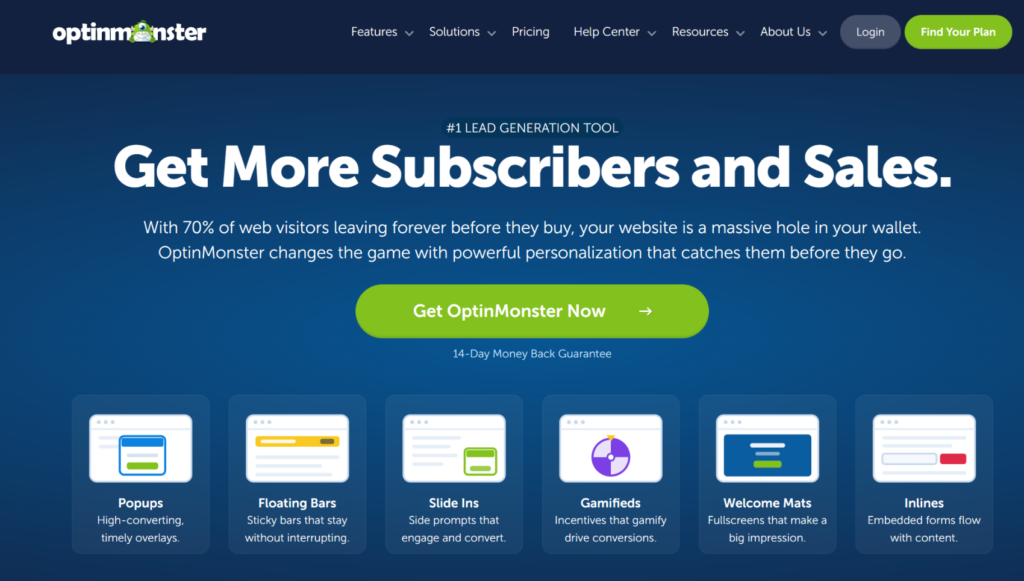
OptinMonster is a conversion optimization toolkit that helps you turn more of your visitors into subscribers, leads, and sales. Its WordPress plugin has more than 1 million active installs.
You can use it to create popups, announcement bars, floating bars, slide-ins, and gamified coupon wheels.
OptinMonster also has a drag-and-drop builder for customizing your campaigns. You can even add animation or sound effects to catch a visitor’s eye.
Its Geolocation Targeting lets you show visitors campaigns based on where they are.
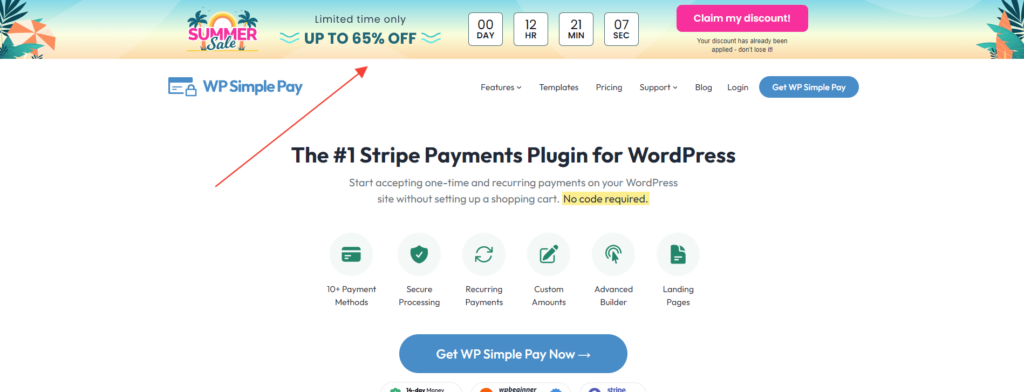
Here’s a floating bar from a WP Simple Pay summer sale, built with OptinMonster. Adding a countdown timer like this one is a quick way to put some urgency into a campaign.
OptinMonster has plenty of display rules for deciding who sees a campaign and when.
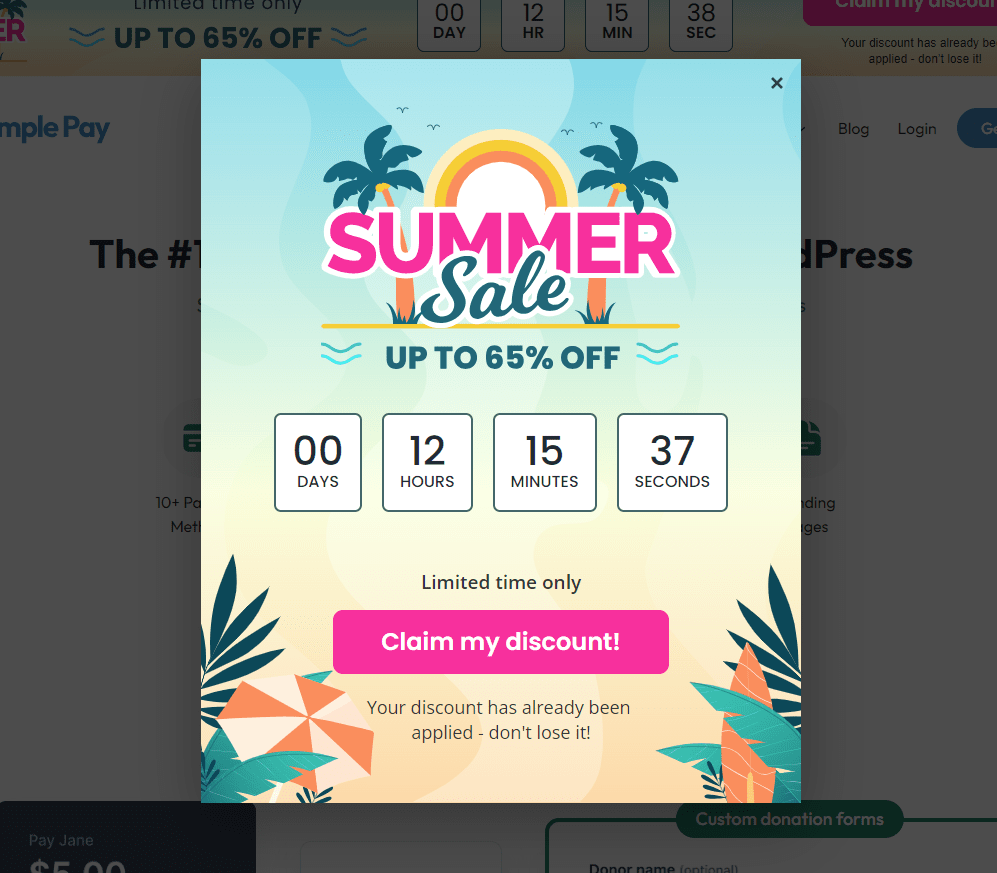
Its Exit Intent® technology shows a popup when a visitor moves to leave the page, like this one from the same sale.
When I went through how OptinMonster handles WooCommerce, the cart-based display rules stood out. You can target shoppers by cart total, cart contents, or the product they’re looking at, which is far more useful for a store than one popup shown to everyone.
For more details, please see our guide on reducing checkout abandonment with an exit intent popup.
Key Features:
- Popups, floating bars, slide-ins, and gamified coupon wheels
- A drag-and-drop campaign builder
- Exit Intent® technology and cart abandonment campaigns (Pro plan)
- WooCommerce display rules for cart total, cart contents, and products (Growth plan)
- Geolocation Targeting (Growth plan)
- Countdown timers for time-limited offers
Why Should You Use OptinMonster?
It’s best for stores losing shoppers at the cart or checkout. Use it if you want exit-intent offers and cart-based campaigns, and you’re ready to pay for the Growth plan to get its WooCommerce targeting.
Pricing: The WordPress plugin is free and connects to an OptinMonster account, which allows 3 campaigns and 500 impressions on the free plan. Basic costs $108 for the first year ($9 a month billed annually) and renews at $210, Pro adds Exit Intent® and cart abandonment for $444, and Growth adds the WooCommerce integration for $804, renewing at $1,470.
2. MonsterInsights

MonsterInsights is a Google Analytics plugin for WordPress with more than 3 million active installs. It adds eCommerce tracking to your WooCommerce store with no coding or custom development needed.
For WooCommerce analytics, it works out of the box. You can see how your coupon codes, add-to-carts, top products, and marketing campaigns perform.
MonsterInsights shows those reports right inside your WordPress dashboard. It sends your store’s data to Google Analytics 4, where you can explore more detailed reports. You can also follow customer journeys to see what a shopper did before they bought.
When I compared MonsterInsights’ plans, I noticed its cheapest Plus plan doesn’t include eCommerce tracking at all. The eCommerce report and WooCommerce tracking start at Pro, so that’s the plan to price for a store.
Key Features:
- WooCommerce eCommerce tracking with no code (Pro plan)
- Revenue, conversion rate, average order value, and top products in your WordPress dashboard
- A cart abandonment report
- Customer journey tracking
- Sends your store data to Google Analytics 4
Why Should You Use MonsterInsights?
It’s best for store owners who want to see which products, coupons, and campaigns actually drive sales. Use it if you’d rather read your WooCommerce numbers in WordPress than learn Google Analytics 4.
Pricing: There’s a free MonsterInsights Lite version, but it doesn’t include the eCommerce reports. Pro, where the eCommerce tracking starts, costs $199.50 for the first year and renews at $399.
3. SeedProd
SeedProd is an AI website builder for WordPress with more than 1,000,000 active installs. It has built-in support for WooCommerce.
With its builder, you can create custom landing pages, checkout pages, shop pages, product pages, and carts.
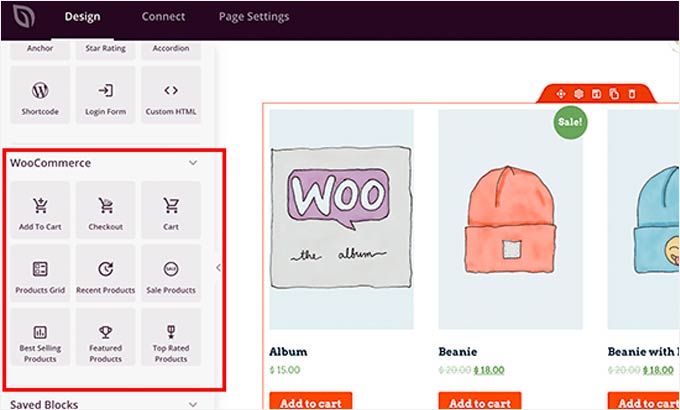
It comes with WooCommerce blocks for adding products, carts, and checkouts to any page.
SeedProd’s theme builder also lets you customize your whole WooCommerce theme without writing a line of code.
On my test store, SeedProd Lite’s dashboard offered Coming Soon Mode, Maintenance Mode, and Landing Pages for free. The Website Builder, login page, and 404 page were all marked PRO.
That fits SeedProd’s pricing page, which lists WooCommerce Support on the Elite plan only. I’d treat the free version as a coming-soon and landing page tool, and budget for Elite if you want custom store pages.
Key Features:
- A drag-and-drop website and landing page builder
- WooCommerce blocks, including Add To Cart, Checkout, Cart, and Products Grid (Elite plan)
- A theme builder for redesigning your whole store
- Coming Soon Mode and Maintenance Mode in the free version
Why Should You Use SeedProd?
It’s best for stores that want custom shop, product, and checkout pages without hiring a developer. Use it if design matters to your brand and the Elite plan fits your budget.
Pricing: The free SeedProd Lite version covers coming-soon and landing pages, but has no WooCommerce features. Elite, the only plan with WooCommerce Support, costs $239.60 for the first year and renews at $599.
4. AffiliateWP
AffiliateWP is an affiliate tracking and management plugin that works with WooCommerce. It lets you set up an affiliate program for your store, so your customers and partners can promote your products.
When someone joins your program, they get a unique referral link and earn a commission on the sales it sends. It also tracks affiliate coupon codes.
You can approve each applicant by hand, or close public signups and invite only the people you choose.
AffiliateWP also gives you reports on link clicks, sales, and payouts. If you’re setting one up, our guide to adding an affiliate program to your WordPress site covers the basics.
When I went through AffiliateWP’s settings, the two options I set first are Require Approval and Allow Affiliate Registration, on the Affiliates Settings tab. With approval on, nobody earns a commission until you’ve looked at their application.
It also works with WP Simple Pay, so you can use AffiliateWP with WP Simple Pay for payments you take outside your store.
Key Features:
- A WooCommerce integration on every plan
- Tracking for referral links and affiliate coupon codes
- Require Approval and manual affiliate signups
- Reports on clicks, sales, and payouts
- Recurring referrals and lifetime commissions (Pro plan)
- Works with WP Simple Pay payment forms
Why Should You Use AffiliateWP?
It’s best for stores with loyal customers, bloggers, or partners who’d happily promote your products. Use it if you want to pay for sales through referrals rather than ads.
Pricing: There’s no free version, but there is a 14-day money-back guarantee. Personal costs $149.50 for the first year and renews at $299, and Pro costs $299.50 and renews at $599.
5. WooCommerce Wholesale Suite
WooCommerce Wholesale Suite is a WooCommerce wholesale plugin that lets you offer special pricing to bulk buyers. It’s now five premium plugins built on top of a free core plugin.
If you sell at different prices to different customers, it’s a flexible way to set that up.
You can set the minimum quantity wholesale customers need to order to get their discount. All the while, retail customers keep seeing your regular prices.
On my test store, the free Wholesale Prices plugin added a Wholesale Prices section right under the regular and sale price fields on the product’s General tab.
For the default Wholesale Customer role, you choose a Discount Type and enter a Wholesale Price and a Wholesale Sale Price. I liked that it sits where you already set prices, so there’s no separate screen to learn.
Key Features:
- Wholesale prices for each product, in the free plugin
- A Wholesale Customer role, with prices hidden from retail customers
- Minimum order quantities (Wholesale Prices Premium)
- Quantity-based discounts (Wholesale Prices Premium)
- Separate premium plugins for wholesale order forms, lead capture, payments, and quotes
Why Should You Use Wholesale Suite?
It’s best for stores that sell to retailers, resellers, or other businesses as well as to the public. Use it if you need separate wholesale prices without running a second store.
Pricing: The free WooCommerce Wholesale Suite Lite plugin is on WordPress.org. Wholesale Prices Premium costs $99 for the first year for one site and is normally $198, and the All Access Bundle with all five plugins costs $299 for the first year.
6. Smash Balloon
Smash Balloon is a social media feeds plugin for WordPress. It lets you embed feeds from Instagram, Facebook, X (Twitter), YouTube, and TikTok on your WooCommerce store, and its free Instagram plugin alone has more than 1 million active installs.
Showing user-generated content on your product pages builds social proof. For example, you can show an Instagram post of a customer using your product, or embed video reviews from YouTube.
Smash Balloon also has a reviews feed that displays your Google and Yelp reviews for free. The Pro version adds Facebook, TripAdvisor, Trustpilot, and WooCommerce product reviews.
Setting up the free Instagram Feed plugin took three steps: connecting an Instagram account, customizing the feed, and embedding it. Have your Instagram login ready, since connecting the account is the first step.
One setting I’d turn on right away is Preserve settings if plugin is removed. It keeps your feeds and settings saved even if you uninstall the plugin later.
Key Features:
- Feeds for Instagram, Facebook, X (Twitter), YouTube, and TikTok
- Shoppable Instagram feeds that link posts to your products (Instagram Feed Pro Elite)
- A reviews feed with Google and Yelp reviews in the free version
- WooCommerce product reviews, plus Facebook, TripAdvisor, and Trustpilot (Reviews Feed Pro)
- A setting that keeps your feeds if you uninstall the plugin
Why Should You Use Smash Balloon?
It’s best for brands with an active Instagram or a pile of good reviews. Use it if you want real customer photos and reviews next to your products as social proof.
Pricing: The Instagram Feed Pro Elite, which adds shoppable feeds, costs $149 for the first year and is normally $298, and the All Access Bundle costs $299 for the first year and is normally $598.
7. Variation Swatches for WooCommerce
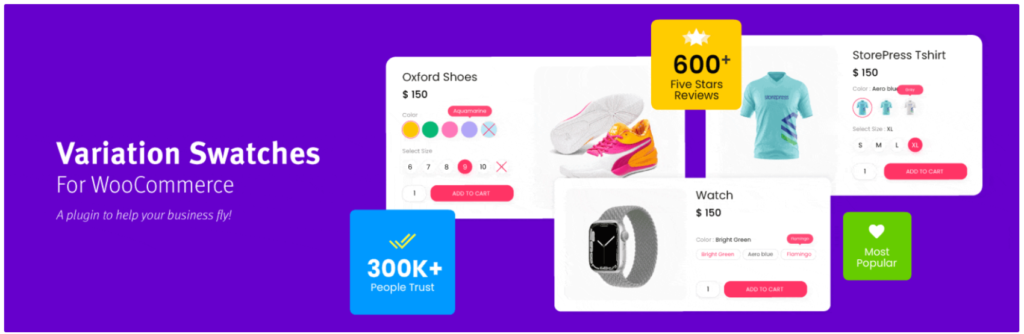
Variation Swatches for WooCommerce is a free plugin that shows your product variations as colors, images, and labels. It replaces the dropdown menus on variable products with something shoppers can see at a glance.
For example, shoppers can pick a color, style, or size by clicking it instead of reading it from a list. It has more than 300,000 active installs.
When I set it up on my test store, I gave a Color attribute the Color type and a hex code for each of its four colors. The plugin swapped the dropdown for four color swatches on its own.
When I picked one, it showed a checkmark, updated the label to show the chosen color, and added a Clear link. I really liked how little setup it needed, since the free version did all of that.
Key Features:
- Color, image, and label swatches in the free version
- Text tooltips on product pages
- Out-of-stock swatches that can be crossed out, blurred, or hidden
- Swatches on the shop page (Pro version)
Why Should You Use Variation Swatches for WooCommerce?
It’s best for stores that sell products in several colors, sizes, or styles. Use it if your product pages still show dropdown menus, since the free version fixes that without a paid upgrade.
Pricing: The free version covers the core swatch types. Pro, which adds shop-page swatches, starts at $49 a year for one site, and there’s also a lifetime license from $149.
8. WPForms
WPForms is a drag-and-drop form builder for WordPress with more than 5 million active installs. WooCommerce store owners use it for the forms WooCommerce doesn’t include.
You can create contact forms, surveys, payment forms, registration forms, and newsletter signup forms using more than 2,100 templates.
It doesn’t have a native WooCommerce integration. Instead, it connects through Uncanny Automator, which can create an order or update an order’s status when someone submits a form.
When I tested WPForms Lite, I built a wholesale inquiry form from the Simple Contact Form template. It gave me Name, Email, and Comment or Message fields in one click.
For a store, that’s the form I’d add first: a way for bulk buyers and stockists to reach you without hunting for an email address.
Key Features:
- A drag-and-drop form builder
- More than 2,100 form templates
- Stripe, PayPal, and Square payments
- WooCommerce orders from form submissions through Uncanny Automator (paid Automator plan)
- Form landing pages and conversational forms (Pro plan)
Why Should You Use WPForms?
It’s best for stores that need contact, inquiry, or survey forms alongside WooCommerce. Use it if you want customers and bulk buyers to reach you without digging for an email address.
Pricing: The WPForms Lite version is free on WordPress.org. Basic costs $49.50 for the first year and renews at $99.
9. Uncanny Automator
Uncanny Automator is an automation plugin that lets your WordPress plugins talk to each other. You build automations, called recipes, by linking triggers, actions, and conditions.
For example, when a shopper adds a product to their cart, a recipe can email them a list of related products.
There are plenty of recipes you can build to cut down on manual work in your WooCommerce store. It lists more than 250 integrations and has more than 40,000 active installs.
When I installed the free version, its setup wizard asked me to connect a free Uncanny Automator account first. That account unlocks app integrations like CRMs and Google apps, with 250 free app credits, so it’s worth doing even on the free plan.
When I checked its WooCommerce triggers, only A user purchases a product and A user views a product were free. The add-to-cart trigger from the example above, and every WooCommerce action, needs a paid plan.
It also connects to WP Simple Pay, which is how you can create a WordPress user account after payment.
Key Features:
- More than 250 integrations
- Recipes built from triggers, actions, and conditions
- Free WooCommerce triggers for purchases and product views
- Cart, order, and review triggers, plus every WooCommerce action (paid plans)
- Uncanny Agent, an AI assistant included with the free version
- A WP Simple Pay integration
Why Should You Use Uncanny Automator?
It’s best for store owners who repeat the same tasks after every order. Use it if you want WooCommerce to trigger actions in your other plugins and apps without code.
Pricing: The free version is on WordPress.org. Basic costs $240 for the first year, billed annually at $20 a month, and renews at the full $25 a month.
10. All in One SEO
All in One SEO is a WordPress and WooCommerce SEO plugin that’s been around since 2007, and it’s active on more than 3 million sites.
It includes Local SEO, Image SEO, sitemaps, schema, and more to help your WooCommerce store compete in search results.
All in One SEO also has WooCommerce SEO features for optimizing product pages, product categories, and more.
When I opened a WooCommerce product on my test store with All in One SEO active, its settings box showed a live search preview. The product title and meta description were built from smart tags like Product Title and Product Short Description.
The pixel counter under the title is the detail I’d use most. Mine read 540 out of 600 recommended, which tells you before you publish whether Google is likely to cut the title off.
Key Features:
- WooCommerce SEO for product and product category pages (Basic plan)
- A search preview and smart tags on every product
- Pixel and character counters for titles and meta descriptions
- XML sitemaps and schema markup
- Local SEO and Image SEO (Plus plan)
Why Should You Use All in One SEO?
It’s best for any store that wants more traffic from Google to its product and category pages. Use it if you’re launching a new store, since getting product titles and descriptions right early saves rework later.
Pricing: The AIOSEO free version is on WordPress.org. Basic, which includes WooCommerce SEO, costs $49.50 for the first year and renews at $99.
11. FunnelKit
FunnelKit is a WordPress funnel builder and WooCommerce checkout plugin. You can use it to build custom checkouts, order bumps, one-click upsells, and automations.
The default WooCommerce cart and checkout pages aren’t built around conversions. FunnelKit’s free Sliding Cart plugin adds a slide-out cart, so shoppers can review their order and head straight to checkout.
FunnelKit also offers pre-made funnel templates for the block editor and page builders like Divi and Elementor.
Its automations come from FunnelKit Automations, which can send a welcome email to a new customer, for example.
When I activated FunnelKit Lite on my test store, a quick-setup wizard came first. Its Store Checkout screen then let me filter templates by builder: Elementor, Block Editor, Divi, Oxygen, Bricks, or shortcodes.
I also liked that its Analytics screen offers sample data, so you can see what the reports look like before your first order comes in. If you’re working on the checkout itself, these ways to optimize your WordPress checkout flows apply whichever plugin you pick.
Key Features:
- Custom store checkout pages
- Checkout templates for the block editor, Elementor, Divi, Oxygen, and Bricks
- Order bumps (Basic plan)
- One-click upsells and A/B testing (Plus plan)
- A free Sliding Cart plugin
- Funnel analytics, with sample data to explore before your first order
Why Should You Use FunnelKit?
It’s best for stores that want to earn more from each order with order bumps and upsells. Use it if the default WooCommerce checkout feels generic and you want one that matches your brand.
Pricing: The free version is on WordPress.org. Basic costs $99.50 for the first year and renews at $129, and Plus, which adds one-click upsells, costs $149.50 and renews at $299.
12. LedgerPort
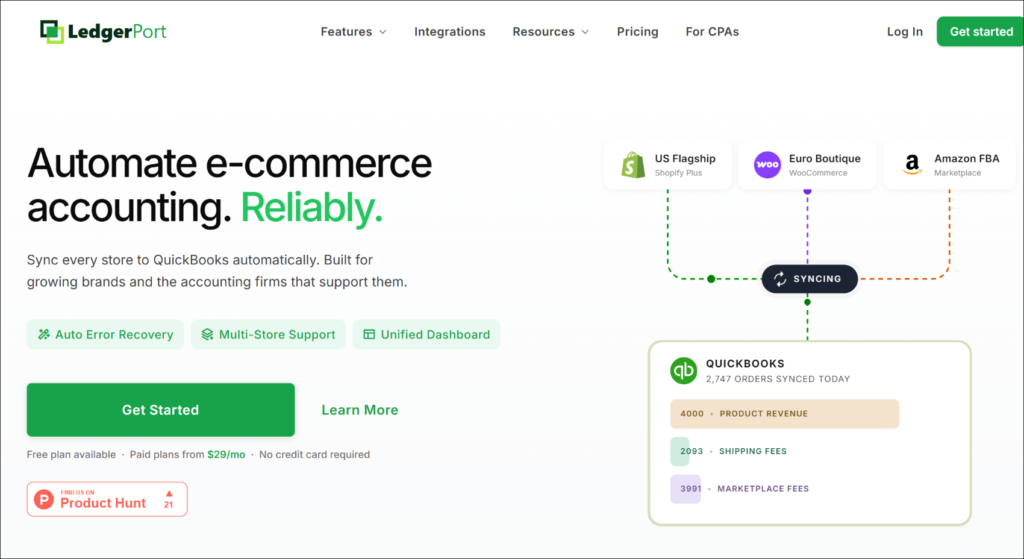
LedgerPort is an accounting automation plugin built for WooCommerce and Shopify stores. It syncs your orders, refunds, and payouts into QuickBooks Online, so you’re not entering transactions by hand or reconciling your books at the end of every month.
It handles refunds, store credit, and restocking fees, each mapped to the right account with a clear trail back to the original order.
It also breaks each payout into revenue, fees, and refunds, so the deposit in your bank account matches what’s in QuickBooks.
If you run more than one store, LedgerPort can manage them from one dashboard. LedgerPort says most stores go live in under 15 minutes, with no developer needed.
LedgerPort greeted me with a warning as soon as I installed it on my test store. It doesn’t convert currencies, so your QuickBooks home currency has to match your store’s currency.
If you sell in one currency and keep your books in another, check that before you sign up.
Its Mappings screen then lets you map WooCommerce products, variations, customers, and payment methods to QuickBooks Online.
Key Features:
- Syncs WooCommerce orders, refunds, and payouts to QuickBooks Online
- Payout journals and fee handling, with real-time sync (Scale plan)
- Mappings for products, variations, customers, and payment methods
- Handles refunds, store credit, and restocking fees
- Multi-store management from one dashboard
Why Should You Use LedgerPort?
It’s best for stores that keep their books in QuickBooks Online and are tired of entering orders by hand. Use it once your order volume makes month-end reconciliation a chore, as long as your store and QuickBooks use the same currency.
Pricing: The free plan covers one store and 30 orders a month, with manual sync. Growth costs $25 a month billed annually, and Scale, which adds real-time sync and payout journals, costs $67 a month billed annually, or $79 billed monthly.
Which WooCommerce Plugin Should You Choose?
The right WooCommerce plugin depends on the problem you’re solving first. These are my top picks for the situations most stores run into.
Best for search traffic: All in One SEO. Its WooCommerce SEO starts on the $49.50 Basic plan, and the search preview on every product makes it easy to get titles and descriptions right.
Best for sales tracking: MonsterInsights. It puts revenue, conversion rate, and top products in your dashboard, but price the Pro plan, since that’s where eCommerce tracking starts.
Best for checkout and upsells: FunnelKit. Its checkout templates work with the block editor and the major page builders; order bumps start on Basic, and one-click upsells start on Plus.
Best for cart abandonment: OptinMonster. Exit Intent® and cart abandonment campaigns start on Pro, and its cart-based targeting needs the Growth plan.
Frequently Asked Questions
1. What Is a WooCommerce Plugin?
WooCommerce is the free, open-source eCommerce plugin for WordPress, and a WooCommerce plugin adds something the core store doesn’t do on its own. Woo’s own marketplace lists hundreds of free and paid WooCommerce extensions, and many more third-party plugins on WordPress.org are built to work with it.
2. What are the best WooCommerce plugins for a new store?
For a new store, start with All in One SEO for product and category SEO, MonsterInsights for sales tracking in Google Analytics 4, and FunnelKit for checkout pages and order bumps. Add plugins for cart abandonment, accounting, wholesale pricing, or affiliates once you have that specific need.
3. Is FunnelKit better than SeedProd for a WooCommerce checkout page?
FunnelKit is better if you want the checkout to earn more, since it adds order bumps from its Basic plan and one-click upsells from Plus. SeedProd is better if you want to redesign store pages to match your site, but its WooCommerce blocks need the Elite plan.
4. Are free WooCommerce plugins enough to run a store?
Some are. Variation Swatches and the free Wholesale Suite plugin cover their core job for free. Others leave the WooCommerce feature out: SeedProd’s free version has no WooCommerce blocks, MonsterInsights’ eCommerce reports need Pro, and AffiliateWP has no free version.
5. How many WooCommerce plugins should I install?
Install one for each specific problem you have, rather than a full stack on day one. Most paid plugins renew at about double their first-year price, so even the three starter picks on their WooCommerce plans renew at $627 a year combined.
6. Do I need WooCommerce to sell one product in WordPress?
No. WooCommerce is built for stores with a catalog, cart, and shipping. To sell one product, service, or registration, a payment form plugin like WP Simple Pay can take one-time or recurring Stripe payments on any WordPress page without a cart.
Final Thoughts
Before you buy any of the best WooCommerce plugins here, check two things: the renewal price, and whether the plan you’re looking at actually includes the WooCommerce feature. Those have changed more than anything else since this list first ran.
My comparison of the best checkout plugins for WordPress and this list of common WordPress eCommerce mistakes to avoid are worth a read next.
If you’re selling one service or product rather than running a full store, you might not need WooCommerce at all. My guides to selling products in WordPress without a shopping cart and accepting payments without WooCommerce walk through the lighter route.
When you’re ready, compare the WP Simple Pay plans and start taking Stripe payments without setting up a shopping cart.
Disclosure: Our content is reader-supported. This means if you click on some of our links, then we may earn a commission. We only recommend products that we believe will add value to our readers.

Leave a Reply